Grief doesn’t always end with the funeral.
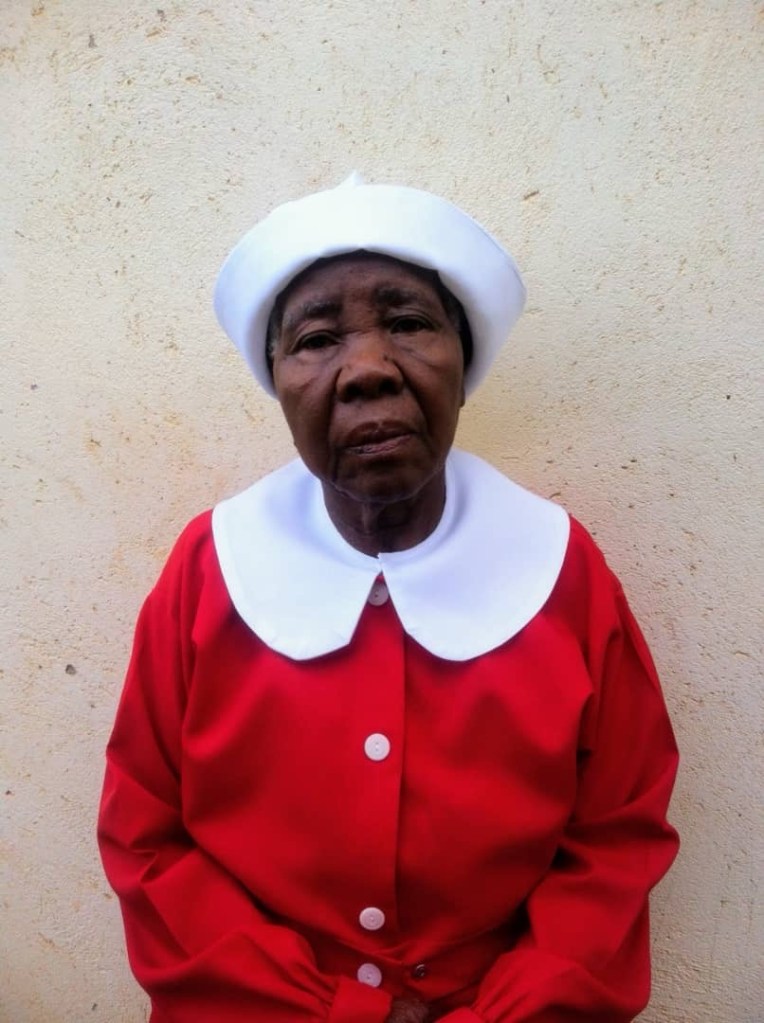
1 Corinthians 13:13
And now these three remain: faith, hope and love. But the greatest of these is love.
Sometimes it lingers for years, waiting for the moment when you are finally ready to face it fully.
My grandmother … my mbuya…passed away on December 30, 2020, during the height of COVID. Like many families during that time, we were separated by distance, uncertainty, and the painful reality that we could not grieve the way our traditions teach us to.
For years, her passing felt unfinished.
My family has never been the same since she passed. When the matriarch leaves, something shifts in the entire structure of the family. Her presence, her wisdom, her quiet authority… all of it leaves an empty space that can never truly be replaced.
But life still goes on.
If I’m being honest, I promised my mbuya I would honour lobola… it has been one of the most stressful parts of my journey.
For those who may not know, lobola is a traditional Southern African marriage custom where a groom’s family offers a bride price to the bride’s family. In Shona culture we often call it roora. It’s not meant to “buy” a woman. Traditionally, it is about respect, unity between families, and honouring the family that raised her.
But the reality is that things can get complicated.
Especially when family relationships are already strained.
Lobola negotiations often involve fathers and extended family, and when those relationships are difficult, something sacred can quickly start to feel like a battlefield instead of a blessing. Having the type of father I have has not made the situation any easier.
At times, it has honestly been overwhelming.
And if I’m being really real…even my body has felt the pressure of becoming someone’s wife.
It’s exhausting.
It reminded me of something Nigerian writer Chimamanda Ngozi Adichie said in her famous talk We Should All Be Feminists — the same talk Beyoncé sampled in her song Flawless…
“We teach girls to aspire to marriage, but we don’t teach boys the same.”
That line has stayed with me for years because it captures a truth many women quietly carry.
My journey has been a whirlwind. I’ve experienced grief, healing, public reinvention, and the courage to finally use my voice. Losing my grandmother during COVID changed my life forever. When I finally travelled to Zimbabwe in October 2025 to lay her to rest, something shifted in me.
It gave me the courage to speak.
I promised my mbuya I would honour our traditions, including lobola. But I also realised something else along the way.
Before I become someone’s wife, I need to be fully myself.
Authentically.
Whole.
Not the version of me shaped by expectations, pressure, or fear.
Just me.
Melissa Natasha Nyamushanya.
Sometimes God humbles you not to break you, but to align you. To remind you that identity must come before covenant.
Marriage is important, but so is knowing who you are before entering it.
And right now, I’m choosing authenticity.
Everything else will meet me there.
It is not about buying a woman, but about respecting the family, acknowledging the union, and honouring cultural tradition.
Although I come from a divorced family, I deeply believe in the unity of marriage.
Watching a marriage end does something to a child. It forces you to confront love, commitment, and family in ways many people never have to think about so early in life. For some people, divorce makes them give up on the idea of marriage altogether.
For me, it did the opposite.
It made me respect it even more.
Marriage, when done right, is sacred. It is partnership, responsibility, and unity. It is two people choosing each other not just in celebration, but through hardship, growth, and transformation. That kind of commitment deserves preparation and honesty.
Which is why I believe it’s important to know who you are before entering it.
Before becoming someone’s wife, I want to stand firmly in my identity…in my voice, my purpose, my faith, and the woman God created me to be.
Because unity in marriage should never require the disappearance of the woman who enters it.
It should amplify her.
And when that time comes, it will be a union built on truth, respect, and intention…not pressure.
Until then, I continue the journey of becoming. I also promised my grandmother that I would follow my dreams, even when the path felt uncertain or lonely.
My mbuya believed in truth, in family, and in living with dignity. She carried a wisdom that only comes from women who have lived long enough to see both struggle and triumph.
Her words stayed with me.
Her lessons stayed with me.
And now, as I prepare to release my first book, I realize that she is a big part of the reason why I finally found the courage to do it.
Because speaking the truth about our lives takes bravery.
Writing a book means opening doors to stories that were once private, painful, and deeply personal. But in many ways, it also means honouring the people who shaped us… the ones who gave us the strength to keep going when life became heavy.
For me, my mbuya is one of those people.
Her passing during the pandemic marked the end of one chapter in my family’s story. But returning to Zimbabwe to bury her properly reminded me that our roots are still strong.
Our ancestors are still watching.
And our voices still matter.
So as I move forward with releasing The Oldest Daughter Playbook, I carry her wisdom with me.
I carry the promises I made.
And I carry the belief that speaking truth is not just an act of courage, it is also an act of honour.
For my mbuya.
For my family.
And for the generations that will come after us.
 The Oldest Daughter Playbook
Leave a comment